May 29 marked a significant milestone for SFL at SWJTU, as the Symposium on Foreign Language Education Reform in the New Era and the 40th Anniversary Celebration of the School were held at the Xipu Campus. Guests, alumni, and faculty gathered to reflect on the University’s century-long tradition of foreign language education, to review the SFL’s four decades of development, and to respond to the national call for strengthening education in the new era.
More than 300 participants attended the event, including Yang Aihua, Deputy Secretary of the CPC Committee of SWJTU; Shi Jian, Coordinator for Party Building of Universities under the Ministry of Education; Liang Maocheng, Member of the Academic Evaluation Committee for Foreign Languages and Literature under the State Council and Dean of the School of Foreign Languages at Beihang University; Hu Anjiang, Vice President of Sichuan International Studies University; Wen Xu, National Distinguished Professor appointed by the Ministry of Education; Zhu Xianchao, Chair of Sichuan Lan-Bridge Information Technology Co., Ltd.; leaders from Sichuan University, Central South University, Chongqing University, the University of Electronic Science and Technology of China, Beijing Jiaotong University, and other institutions; as well as former leaders, retired faculty, distinguished alumni, and representatives of students. Partner institutions and alumni from around the world also sent congratulatory letters and video messages. The celebration was presided over by Li Chengjian, Secretary of the SFL’s Party Committee.

In her speech, Yang Aihua extended sincere appreciation to all those who have supported the development of SWJTU and SFL. She emphasized that the University’s 128-year journey, marked by relocation, resilience, and renewal, is also a history of foreign language education deeply intertwined with national destinies and institutional growth. Standing at the new starting point of the SFL’s 40th anniversary, she expressed three expectations to SFL, to uphold the original aspiration of cultivating talent and carry forward the tradition of SWJTU’s foreign language education, to strengthen discipline development and promote interdisciplinary integration under the “New Liberal Arts” initiative, and to serve national strategies by nurturing foreign language professionals with global competence and patriotic commitment.

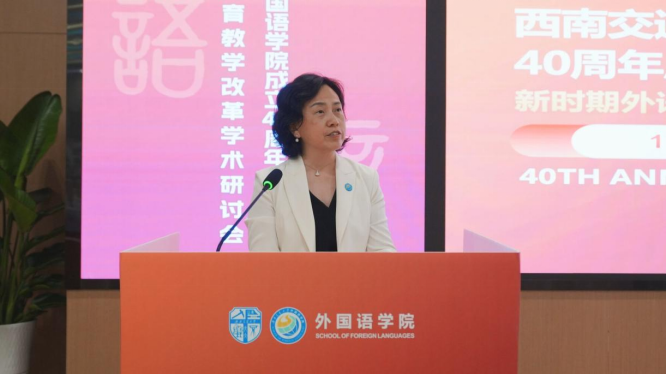
The first Dean Xia Weirong offered a heartfelt retrospective on the SFL’s early years after its establishment, bringing the audience back to the days at the foot of Mount Emei, where the first generation of pioneers trained foreign language professionals who later served at Confucius Institutes abroad and on Belt and Road projects.
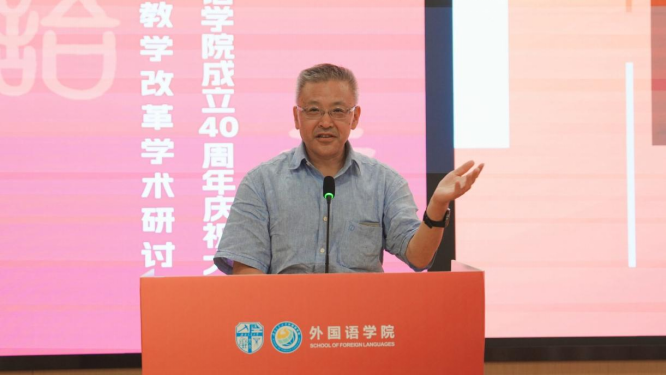
Former Dean Fu Yonglin, who participated in China – U.S. trade negotiations and UN meetings, shared insights from the perspective of cross-cultural communication. He encouraged foreign language professionals to engage actively in building a community with a shared future for humankind, to broaden China’s strategic space in the international landscape. He also called for enriching and continuously improving new forms of human civilization by using foreign languages to absorb and disseminate the essence of Chinese civilization, thereby promoting more equal, wise, and insightful dialogues among nations. Furthermore, he advocated shaping a new model of globalization, steadfastly upholding the nation’s foundational principles and utilizing the power of foreign languages to pursue China’s rights in rule-making, discourse, and resource allocation within globalization.
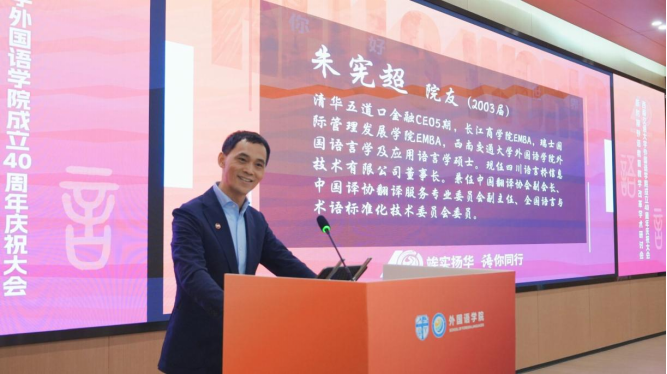
Alumnus Zhu Xianchao revisited his journey of preparing for and pursuing graduate studies over two decades ago. As his entrepreneurial venture coincided with his postgraduate years, the language service company he founded, Lan-Bridge, has grown into a leading enterprise in China’s language service industry today, making his time at the SFL all the more precious. In the face of AI’s impact on language, he emphasized that cognition holds greater significance than technology or management. Mastering a foreign language, he noted, is like gaining an extra eye to see the world and an extra ear to listen to it, enabling a more comprehensive understanding and a more objective evaluation of the world. This, he explained, is what constitutes cognition. By enhancing cognition and unlocking wisdom, one can break through the bottlenecks of personal and professional growth.
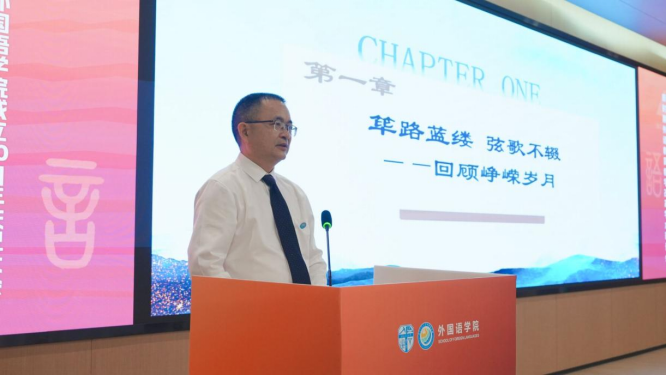
Dean Yu Senlin delivered a development report for the SFL. He summarized the achievements attained through four decades of dedicated cultivation and outlined the blueprint for the SFL’s future growth. Standing at this new historical juncture, the SFL will proactively address the opportunities and challenges brought by new technologies such as artificial intelligence to foreign language education. The SFL aims to establish itself as a training ground for “foreign languages plus” interdisciplinary talents, a hub for innovation in foreign language and literature studies, a supplier of regional and area knowledge, a strategic stronghold for enhancing international communication capabilities, and a model for reforms in foreign language education development.
Chaired by Shi Jian, the academic symposium officially commenced following the celebration ceremony.
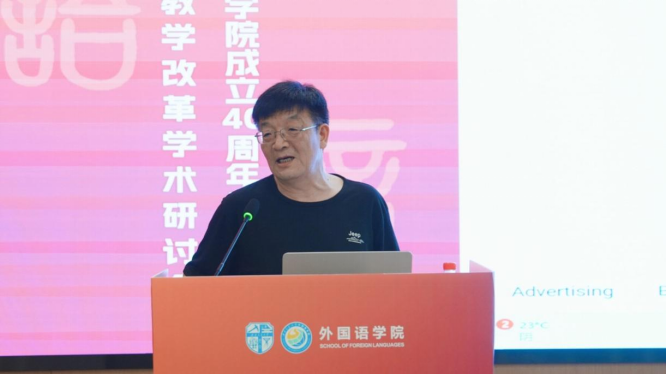
Liang Maocheng, Dean of the School of Foreign Languages at Beihang University, in his presentation titled “Preliminary Discussions on Foreign Language Education Reform in the Era of Artificial Intelligence,” analyzed the impact of generative artificial intelligence, represented by ChatGPT and DeepSeek, on foreign language education. He explored measures proposed by the foreign language education community to address current challenges, including the development of AI literacy courses and the professional growth of foreign language teachers in the new context.
Hu Anjiang, Vice President of Sichuan International Studies University, in his speech titled “Focusing on Strategic Needs, Promoting Adjustment and Optimization, and Building a Distinctive First-Class Discipline in Foreign Languages and Literature,” emphasized that constructing a distinctive foreign languages and literature discipline must consistently adhere to serving major national strategic needs and socio-economic development. He highlighted the importance of prioritizing discipline construction, optimizing discipline structures, leveraging disciplinary strengths and characteristics, strengthening intrinsic discipline development, and fostering interdisciplinary integration.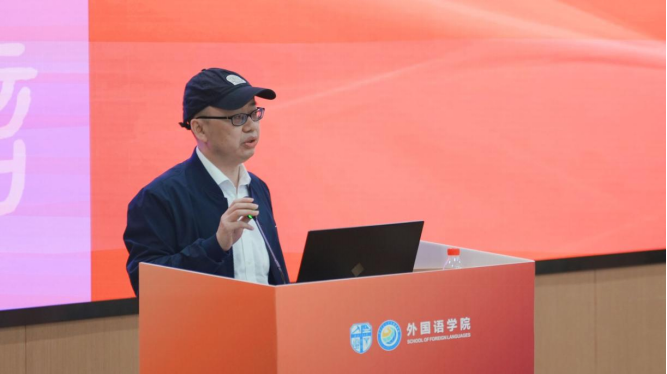
Wen Xu from the School of Foreign Languages at Southwest University, in his presentation titled “The New Concept of Holistic Education and Foreign Language Talent Cultivation in the AI Era,” focused on analyzing the advantages of AI technology in enhancing foreign language learning efficiency, personalized learning experiences, and students’ language proficiency and critical thinking. He proposed deeply integrating AI technology with the new concept of “holistic education” into foreign language education.
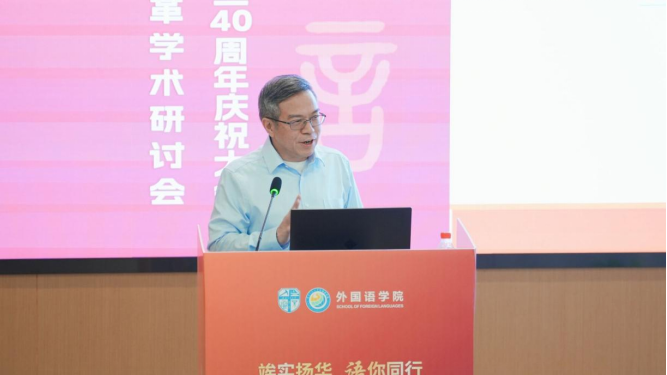
During the thematic report session, Wang Xin, Dean of the School of Foreign Languages at Sichuan University; Sun Wenbo, Party Secretary of the School of Foreign Languages at Beijing Jiaotong University; Mo Qiyang, Dean of the School of Foreign Languages at Chongqing University; Hu Jiehui, Dean of the School of Foreign Languages at the University of Electronic Science and Technology of China; and Yang Wendi, Dean of the School of Foreign Languages at Central South University, shared their theoretical insights and practical explorations on foreign language education reform in the context of digital transformation. They advocated for foreign language education to embrace artificial intelligence and adapt to its new forms.
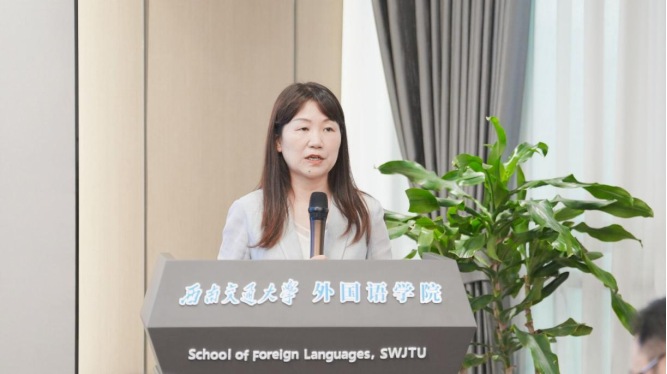
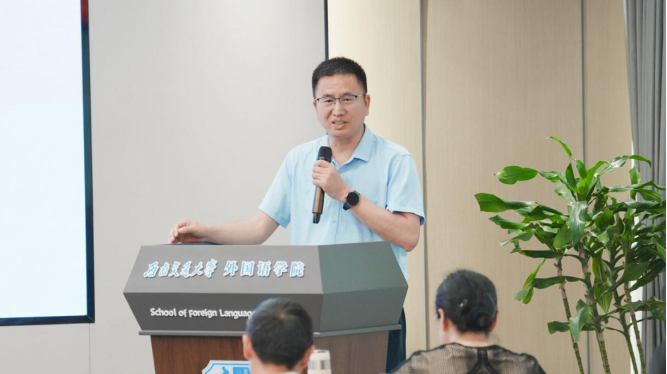

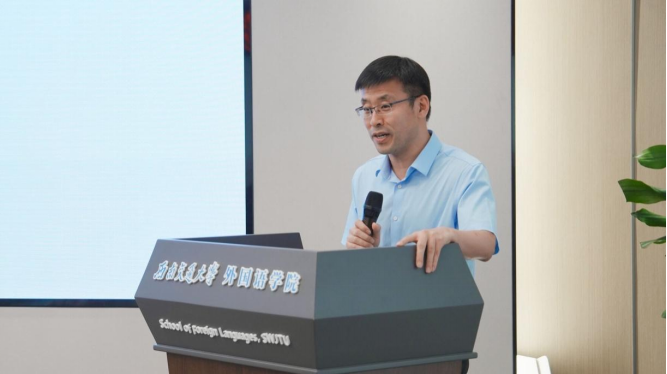
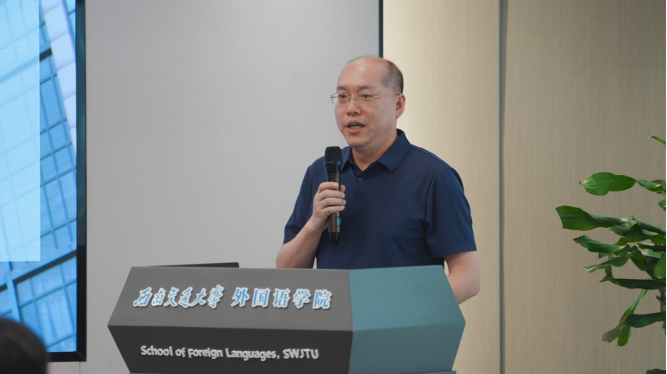
At the forum titled “Four Decades of Excellence, Conversations for the Future” held during the college anniversary celebration, three generations of professionals in the field of foreign languages, senior, middle-aged, and young, engaged in a dialogue between researchers of the SFL and disciplinary history and those who personally experienced and shaped this history. Together, they reminisced about the remarkable years gone by. The disciplinary history research team presented findings from their project on exploring, compiling, and utilizing the SFL’s history, covering topics such as students serving as interpreters during the War of Resistance Against Japanese Aggression, the German Language Training Center under the Ministry of Education, the historical trajectory of Japanese language education at the university, and cross-cultural dialogues tracing the footprints of figures like Sprague and Garfield at the university. These presentations resonated deeply with the retired leaders and senior professors in attendance. During the concluding session, Shi Jian, the liaison officer for Party building work at universities directly under the Ministry of Education, spoke highly of the achievements of the college and disciplinary history project. He emphasized that the study of disciplinary history draws wisdom and strength from the university's profound historical heritage, and the exploration of the stories and contributions of foreign language professionals further highlights their mission to “resonate with the nation’s pulse”.


Through four decades of trials and triumphs, the SFL has left steadfast footprints in the long river of time. Standing at this new starting point of its 40th anniversary, the college will continue to uphold the university spirit of “Persevering in Self-improvement for the Rejuvenation of the Chinese Nation; Fortifying Oneself to Ceaseless Activity”, adhere to its motto of “Bridging the Ancient and the Modern, Connecting the Chinese and the World”, and collectively inscribe a new and brilliant chapter in addressing the era’s question of “Building a Strong Nation Through Education: What Role Can Foreign Languages Play?”