Recently, the summer exchange activity, Chengdu Tour of the Academic Program for American Undergraduates, sponsored by the Center for Language Education and Cooperation and hosted by SWJTU, concluded successfully in Chengdu.
The activity was jointly planned and implemented by the YOUTH LINK Project team of SWJTU International Communication Center and the China Education Tour team from the United States. Focused on topics of great interest to American students, including technology, ecology, cultural heritage and Chinese lifestyles, the program organized distinctive activities covering giant pandas, Sanxingdui Ruins, Chinese poetry, intangible cultural heritage, high-speed railways and robots, which were well-received by all participants.
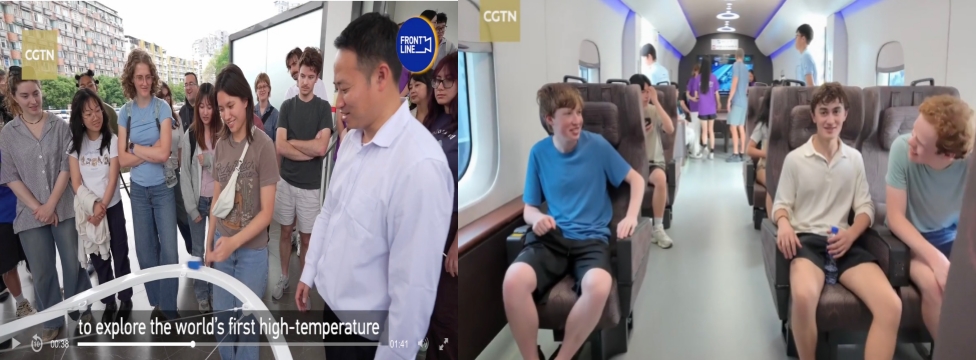
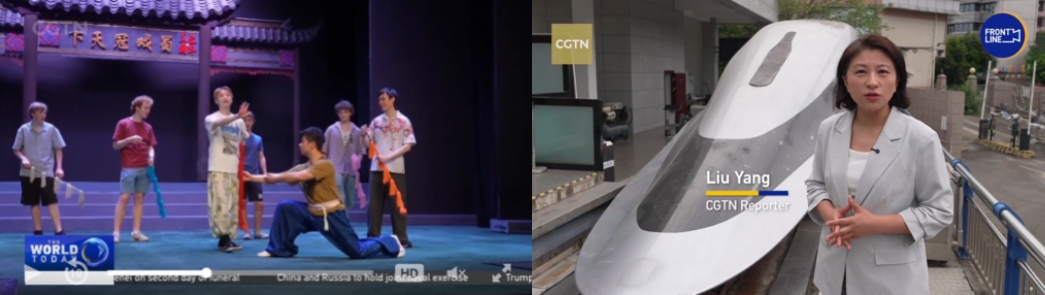
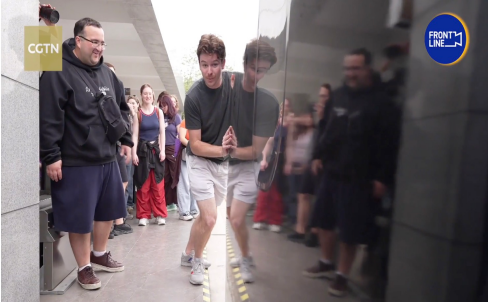
The university opened to participants the world’s first engineering prototype vehicle and test line for high-temperature superconducting high-speed maglev. In May this year, CGTN reporters accompanied the students to the test line and recorded the entire experience. The American students took part in immersive maglev experiments, rode the engineering prototype, and exchanged views with laboratory specialists. A series of reports titled Ivy League Students Explore China: From Maglev to Sanxingdui, What Have They Discovered? was released, fully presenting the students’ impressions of China’s innovative achievements in rail transit.
To experience Chengdu’s culture, the university conducted an activity, themed “Visiting Shops and Homes: Experiencing the Lives of Chengdu Locals”. American students were divided into groups in terms of art, technology, intangible cultural heritage, design and entrepreneurship. They visited the residences and studios of young Chengdu residents to gain an in-depth understanding of their authentic stories. At Sichuan Opera Theatre, the students watched young performers rehearse and showcase what they had learned with artists specializing in folk music, puppetry, martial arts and Sichuan kung fu tea. The richness and charm of Sichuan culture left a deep impression on all American participants.
Henry Hampel, a student from Yale University, noted that “We have a wide range of options, including cooking, musical instruments, kung fu and more. This is not only an opportunity to learn skills, but also an experience about communication, teamwork and mutual growth.” Tetiana Luchak, also from Yale, shared her thoughts: “China holds countless wonderful treasures to share with the world, and all of them are breathtaking. As an international visitor, I feel fortunate to deeply explore the connections between China and the rest of the world.”
It is reported that this program has been running for four years with three sessions held annually, receiving over 400 undergraduates from prestigious Ivy League institutions, including Yale University, Brown University and Johns Hopkins University. The program is known for its high academic standards. American students on the study tour can earn credits from Chinese language courses and transfer them back to their US universities. Through preliminary language training, local task-oriented learning and diverse language output tasks, the program achieves in-depth integration of language practice and cultural understanding. This summer exchange activity has been covered by CGTN, China Media Group. Up to now, the series of related reports have garnered more than 5 million global views.