On November 8, the exhibition themed “Behind the Masks: Discovering Sanxingdui and Jinsha” and academic symposium were officially held at St Anne’s College, University of Oxford. The event was jointly sponsored by the Sichuan Cultural Heritage Exchange and Information Center, the Sanxingdui Museum, and the Jinsha Site Museum, and co-hosted by SWJTU and Foreign Language Teaching and Research Press (UK). From November 8 to 12, 2025, this event marks the first stop of the “Sanxingdui–Jinsha Enters World-Class Universities” global tour. As the initiator and co-curator of the project, SWJTU played a key role in bringing the ancient Shu civilization into a world-renowned academic institution, building an important bridge for China–UK cultural exchange and mutual learning among civilizations.
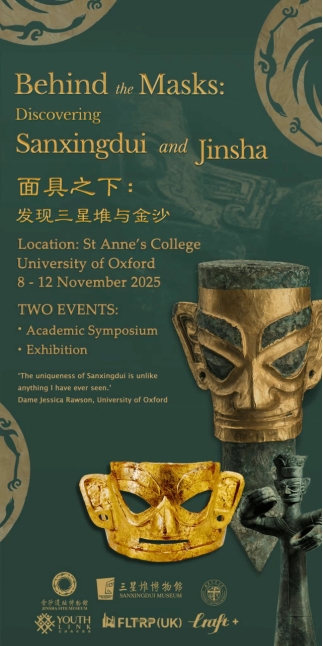
The exhibition centers on 14 high-quality replicas of key cultural relics unearthed from the Sanxingdui and Jinsha sites, including the bronze human head with a gold mask, bronze masks, and the Sun Immortal Bird gold ornament. Through texts, images, videos, multimedia displays, and Augmented Reality, the exhibition vividly recreates the archaeological excavation process and the cultural landscape of the ancient Shu civilization.
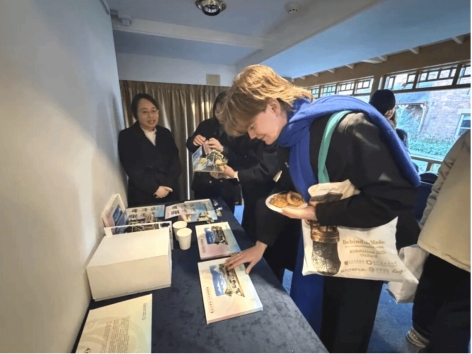
The project, carried by the International Communication Center of the School of Foreign Languages (SFL) at SWJTU, is themed on “dialogue with the world” and pinpointed “inquiry-based, interactive, international, and youth-oriented”. Collaborating with British sinologists, translators, and visual designers, the team crafted an exhibition outline tailored to local audiences, innovating boldly in both narrative and visual presentation. Multiple interactive activities were designed, including AR glasses allowing visitors to “enter” an ancient Sanxingdui sacrificial ceremony, a 3D “Ancient Homeland Puzzle”, a “Sacred Tree Pop-up Card”, and a “Bronze Mask Photo Station”, enabling participants to experience the charm of the ancient Shu civilization engagingly.
The exhibition attracted leading archaeologists, historians, sinologists, and Oxford students from both China and the UK. Distinguished guests included: Dame Jessica Rawson, former Vice-Chancellor of Oxford University, renowned archaeologist, Fellow of the British Academy; Chris Gosden, Professor of European Archaeology and Fellow of the British Academy; Donna Kurtz, Emeritus Professor of Classical Art at Oxford; Julia Lovell, Professor of Modern Chinese History and Literature at Birkbeck, University of London; James Trapp, sinologist and translator. The opening ceremony was hosted by Noah Shenoy, a student of Chinese Studies at Oxford.
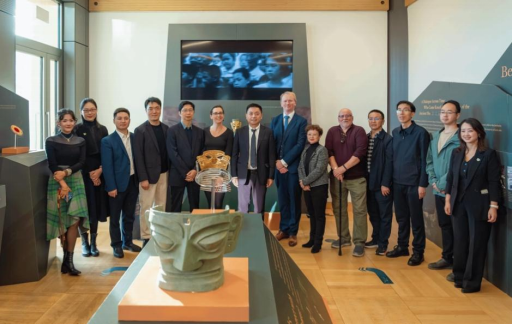
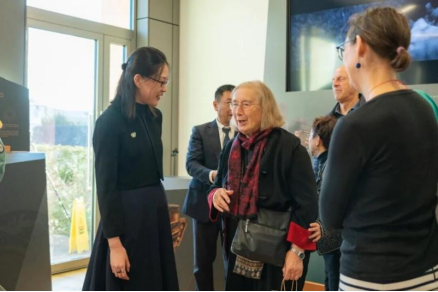
At the opening, Prof. Donna Kurtz praised the exhibition, stating: “Excellent! This is the most beautiful Sanxingdui exhibition I have seen overseas.” She commended the cultural depth and artistic style presented. Oxford archaeologist Dr. Anke Hein noted: “What is remarkable is how such a grand and authentic historical narrative is presented within a limited space.” British sinologist James Trapp commented: “This exhibition draws a completely new audience in a fresh way. It is small, but its impact is powerful.” Jacqueline Senior, Senior Editor at Oxford Archaeology Press, remarked: “An excellent introduction to such an important and mysterious site. Even without commentary, the labels and narrative are crystal clear, though the expert interpretations added even greater depth.”
Prof. Rawson recalled her visit to Sanxingdui in May 2024, describing the ancient Shu civilization as “special, astonishing, and unique”, and emphasizing its “global appeal deserving worldwide attention”.
On the same day, St Anne’s College witnessed the academic symposium “Understanding China through Archaeology: History, Culture, and Art”. Scholars from both countries delivered keynote speeches and engaged in in-depth dialogue. Ms. Wang Fang, Deputy Director and Researcher of the Jinsha Site Museum, delivered the opening address. Dr. Anke Hein discussed the interactions between ancient Shu culture and the eastern Tibetan Plateau. Prof. Li Haichao of Sichuan University analyzed the rise and fall of ancient Shu from the perspectives of resources and ritual. Dr. Wang Shengyu of the University of Hong Kong, focusing on “Gold Artifacts from Sanxingdui and Jinsha: Light, Space, and a System of Decoration,” explored the symbolic meaning of gold artifacts in ancient Shu aesthetics and religious systems. In a solemn and enthusiastic atmosphere, Dame Jessica Rawson concluded with a concise and insightful summary.
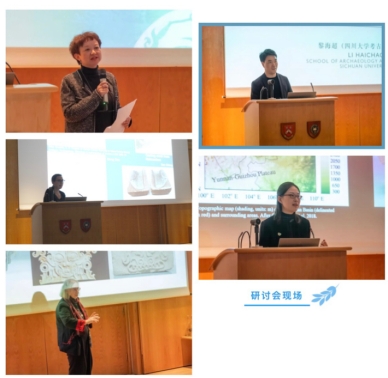
The symposium deepened academic consensus between Chinese and British scholars and, through the platform built by SWJTU, laid a foundation for future international academic collaboration.
This event stands as a successful example of China–UK interdisciplinary collaboration, while the new round of Sanxingdui excavations has championed multidisciplinary cooperation since 2019. By hosting the exhibition and symposium, SWJTU helped transform archaeological discoveries from “regional findings” into “global topics,” enabling the world to better understand the diversity and inclusiveness of Chinese civilization.
Moreover, the event drew extensive media attention both domestically and internationally. Coverage came from CGTN, the European Times English website, Xinhua News Agency, Guangming Daily, Sichuan Observer, as well as overseas media outlets such as FOX, CBS, and NBC, alongside industry media like “Museum Headlines.” A total of 477 media platforms reported on the event, reaching approximately 59.25 million viewers, marking another major achievement of SWJTU in promoting Chinese culture globally.
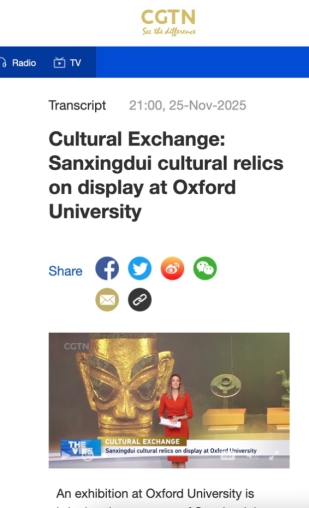
From Chengdu Plain to the academic halls of Oxford, the overseas debut of Sanxingdui and Jinsha demonstrates the ancient Shu civilization’s emerging influence on the global academic stage. It signifies the transformation of a regional archaeological discovery into a topic of international cultural interest and represents another milestone in China-UK cooperation in cultural heritage protection, academic research, and civilizational dialogue. With an international narrative, the event helped overseas audiences gain a deeper understanding and recognition of ancient Chinese civilization and art, further promoting cross-cultural exchange and mutual learning.
Since 2022, Chinese institutions and Oxford partners have jointly organized multiple Sanxingdui-themed cultural exchange events. This year’s exhibition and symposium serve as a concentrated presentation of ancient Shu civilization research in the UK and a new achievement in China-UK cooperation in cultural heritage and civilizational dialogue, offering an important window for international audiences to understand ancient Chinese civilization.
Since 2022, SWJTU has collaborated with the Sanxingdui Museum, the Oxford Confucius Institute, and Foreign Language Teaching and Research Press (UK) to hold annual Sanxingdui-themed activities in the Oxford area, including the “Discover Sanxingdui” scholar dialogue, the “Amazing Sanxingdui Journey” youth program, and the Dragon Boat Festival gold-mask workshop. These events have attracted wide participation from British universities, primary and secondary schools, and the general public, helping to solidify the overseas foundation for the dissemination of Chinese culture.